
Automotive application
Springs for automotive
parts and assemblies.
Seat frames, latches, suspension, thermal management, motors and oil pumps. We reproduce the spring inside your assembly drawing and hold the load, the geometry and the batch record from sample through volume — wound in Rayong, Thailand.
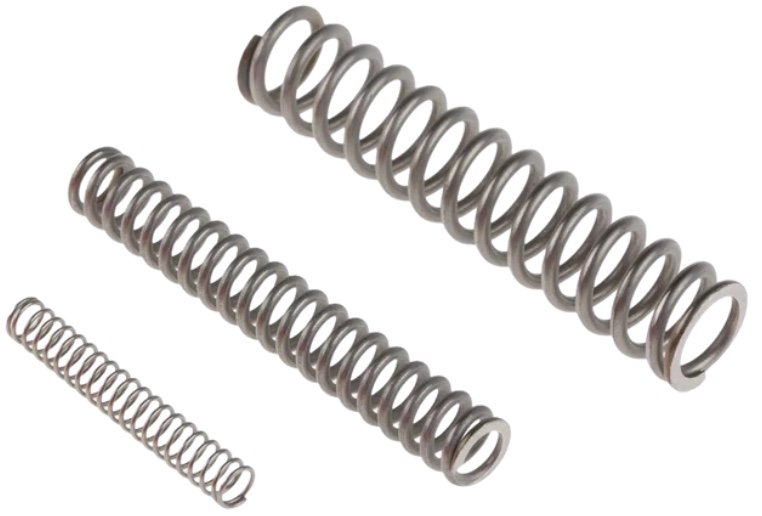
We supply the spring inside the assembly
Thailand is the largest vehicle producer in Southeast Asia, and Chinese vehicle and parts makers have been landing here through the last few years. The pattern of these programs is consistent: a formal drawing, a defined validation route and a fast production ramp.
Our customer is the parts maker or Tier-1 supplier holding the assembly drawing — not the vehicle maker buying direct. You send the drawing for the spring or the sub-assembly, we reproduce it, prove the loads and ship to your line on the ramp you set.
- Compression, tension, torsion, wave springs and wire forms
- Stamped spring plates and contact strips where the assembly needs them
- Closed and ground ends, hooks, legs and bends as drawn
- In-house stress relief, tempering, finishing and load testing
- Sample, pre-production and volume quantities from one plant
The four inputs that decide the quote
Most automotive RFQs stall on missing information rather than price. If the drawing carries these four items, the coil can be confirmed and the test plan written in the same pass.
- Drawing with material, finish and inspection standard
- Annual volume and the ramp or takt time
- Known failure mode or field complaint, if there is one
- Whether a PPAP-style submission is required, and at what level
Five positions, five different problems
The same compression spring in a seat frame and in a thermal valve is not the same engineering problem. These are the positions we see most often, and what each one makes us watch.
Seat frames and rails
Frame tension springs, rail return springs, lumbar and headrest lock springs. Noise and fatigue life are the real issues: cycle count, end treatment and surface lubrication have to be fixed at the sample stage, not after volume starts.
Latches and hinges
Torsion springs, retaining clips and limit springs. The assembly torque window is narrow, and the feel has to repeat batch to batch, or the line starts picking parts.
Suspension and damping
Large-wire compression springs and bush inner springs. Wire diameter limits, shot peening and free-length stability after heat treatment decide whether the part holds its ride height.
Thermal management
Expansion valves, electric water pumps and air-conditioning lines use compression and wave springs. Media compatibility and long-term load loss are the constraints; stainless is usually the starting point.
Motors and oil pumps
Brush pressure springs, wave washers and retaining rings; relief and return springs inside the engine oil pump. A brush spring has to keep pushing as the brush wears down, and a pump spring has to hold its cracking pressure in hot oil for the life of the engine.
Sub-assembly supply
Where the drawing covers more than one spring, we build the parts as one kit: same lot, same finish, same inspection record, packed in the sequence your line consumes them.
What a Tier-1 program actually audits
Automotive sourcing rarely fails on the first sample. It fails when batch three does not match batch one. These are the controls we put around that risk.
| Stage | What we do | What it protects |
|---|---|---|
| Incoming wire | Heat number and measured wire diameter recorded per lot | Load drift caused by a change of wire lot |
| Setup | First-piece approval, parameters locked by part number | Settings that do not return after a tooling change |
| In process | Patrol inspection against the drawing | Drift during a long run |
| Final | Load, free length and visual check sampled by lot | Batch-to-batch differences at your line |
| Traceability | Lot number linked to wire, machine and inspection record | Slow or inconclusive complaint investigation |
Inspection frequency and record format are agreed at RFQ. Where a customer’s own control plan applies, we work to that document rather than to our default.
Material by duty, not by habit
The four grades below cover most automotive parts we run. The final choice follows the drawing and the environment the part sees.
| Material | Common grade | Typical position | Why it is chosen |
|---|---|---|---|
| Stainless steel | SUS304 / SUS316L | Latches, interior, thermal, exhaust-adjacent | Corrosion resistance first; preferred where salt spray is specified |
| Spring steel | 65Mn | Suspension, seat frames, heavy-duty parts | High strength, paired with heat treatment and shot peening |
| Music wire | SWP-B | Seats, pumps, motors, high-cycle parts | Good fatigue behaviour at million-cycle duty |
| Phosphor bronze | QSn6.5-0.1 | Contacts and conductive strips | Combines conductivity with spring temper |
Move one or two part numbers first
When a part is already in production elsewhere, we do not ask you to move the whole BOM. The usual route is one or two representative part numbers, proven in parallel before the rest follows.
We can take over a mature part exactly as it is. There is no need to redesign it: send the drawing and a current sample, and we reproduce the geometry, material, heat treatment and finish to your existing specification.
Select
One or two representative part numbers, with drawing and current sample.
Confirm
Both sides sign off dimensions, material, heat treatment, finish and inspection standard.
Trial
Small production run, assembled alongside the current supply.
Transition
Volume moves once the trial is stable; any change is notified in advance.
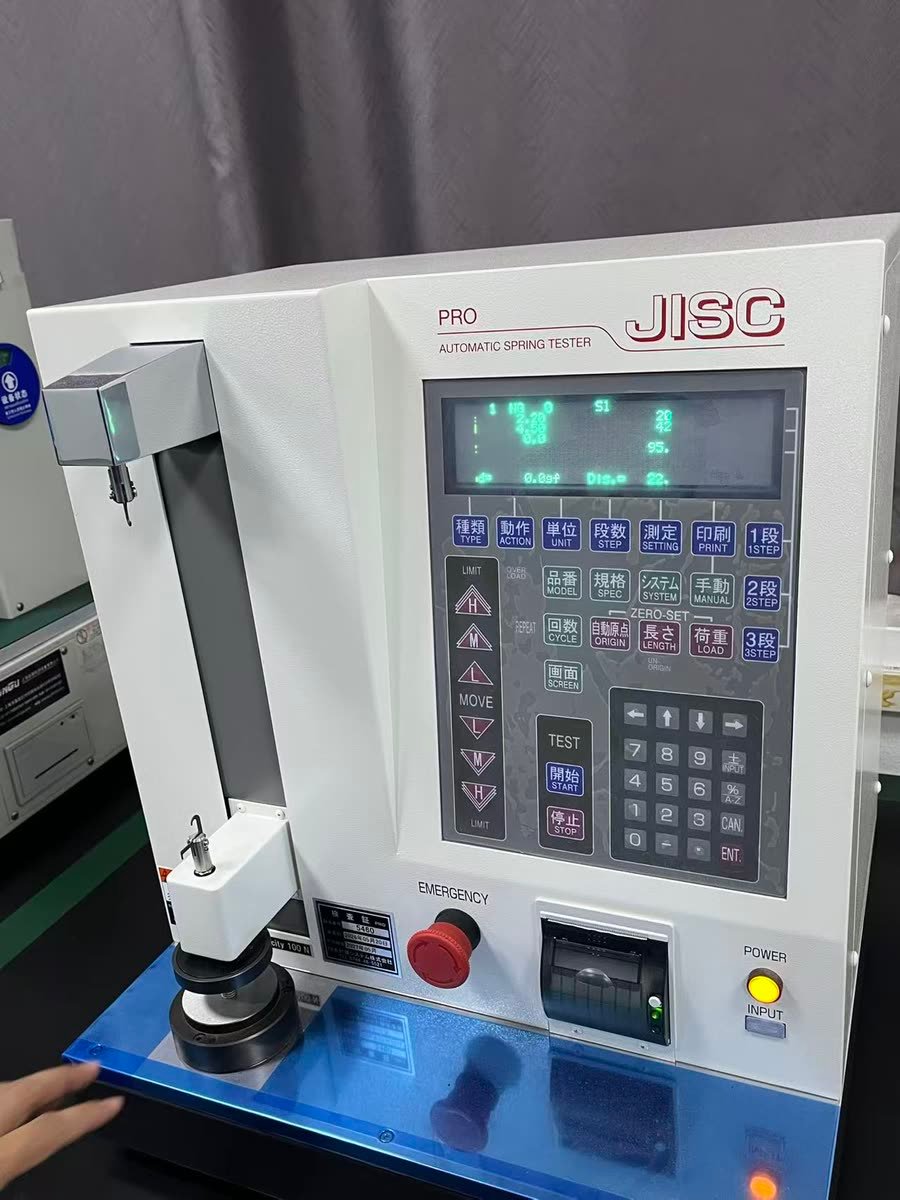
Volume in Rayong, group as backup
Automotive programs ramp fast. The answer to “can you take the volume” has to name the plant that will run it.
- AOFENG SPRING (THAILAND), Rayong — forming, heat treatment, finishing and inspection for standard wire diameters, delivered locally. Volume supply runs here; equipment is added as the order grows.
- Guangdong Aojin Precision Technology, Zhaoqing — 80,000 m², around 300 staff, 600+ production machines and 100+ test machines, as capacity backup and for ultra-fine wire or special materials.
- Quotation — priced by part number. Volume is scheduled in Rayong first; where the group runs a part, the origin is stated on the quotation.
Add equipment, not distance
Volume is made in Rayong. When the order is stable, we add machines and shifts in the same plant rather than moving the part back to China. That keeps the price, the lead time and the point of responsibility unchanged.
The group plant in Zhaoqing sits behind the Rayong operation as a backup for peak demand or a sudden increase, and it takes the work the Rayong plant is not equipped for.
Families used in automotive assemblies
Automotive spring questions
Do you supply vehicle makers directly?
No. We supply the parts makers and Tier-1 suppliers that hold the assembly drawing. If you are a Tier-1 or a component manufacturer, we can quote the spring inside your assembly.
Are you IATF 16949 certified?
Not yet. The Rayong plant holds ISO 9001:2015 and ISO 14001:2015, and automotive quality management certification is in progress. We state the current position so sourcing decisions are not made on an assumption.
Can you reproduce a part we already buy?
Yes. Send the drawing and a current sample. We reproduce the geometry, material, heat treatment, finish and inspection standard to your existing specification, then run a small batch for parallel assembly validation.
What about PPAP or a customer control plan?
We work to the submission level and control plan agreed at RFQ. The inspection records, lot traceability and change notification are set up to match the document you audit against.
Can you fatigue test the part?
Yes, in-house, to the load range and cycle count agreed at RFQ. We do not quote a life figure without a test condition; if you need a life claim, the test is specified and quoted separately.
Which wire diameters can you run?
0.08 mm to 8.0 mm in current production, with expansion to 12.0 mm planned as equipment is installed. Parts outside the current range are reviewed case by case.
Send the drawing, get a process review
Drawing, sample photo and annual volume are enough to start. We will confirm whether the part can run in Rayong, what the test plan should be, and what we need next.
AOFENG SPRING (THAILAND) · Rayong, Thailand