
Application Guide
Medical device springs:
change control matters more than the first article.
A biopsy forceps spring that works is not the deliverable. The deliverable is that batch 500 is the same part as batch 1 — and that if it ever is not, you hear about it from the supplier before you hear about it from a customer.
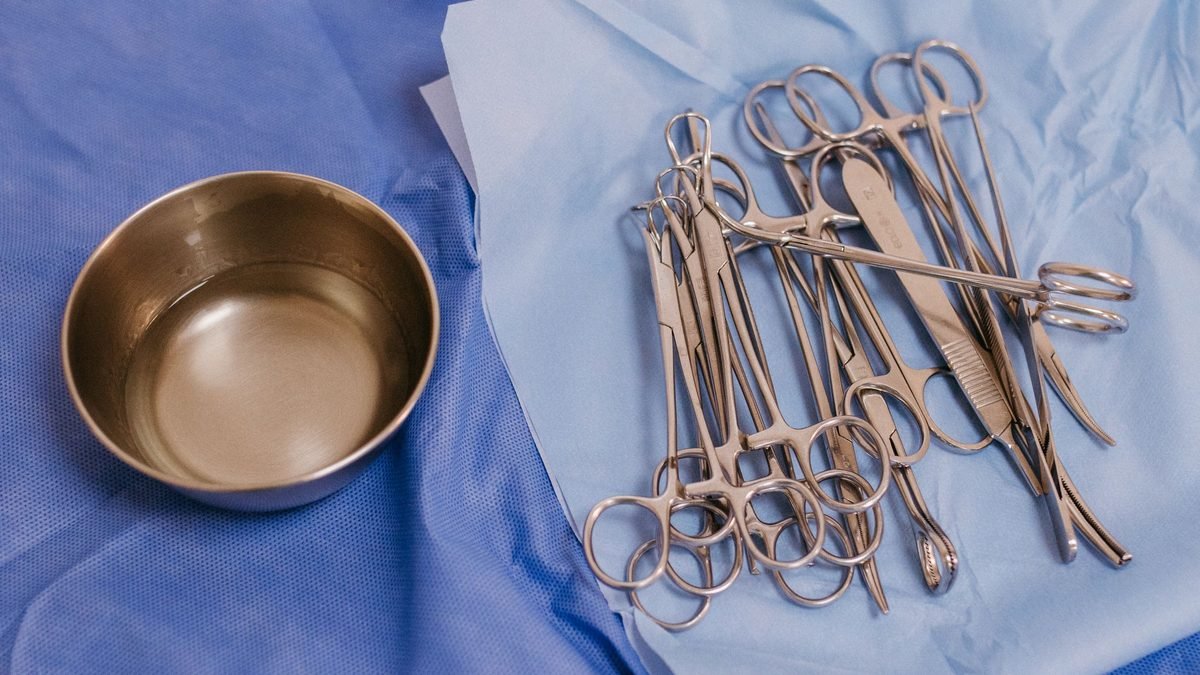
Medical spring sourcing conversations tend to start in the wrong place. Both sides go straight to capability — can you hold this tolerance, can you form this geometry, what is your minimum wire diameter — and skip the question that actually decides whether the relationship survives its first year.
That question is: what happens when something changes?
What a medical customer is actually afraid of
Nobody in this industry has been burned by a supplier who could not make the part. They have been burned by a supplier who made the part, then quietly changed something — a wire mill, a heat-treat cycle, an end-grinding method, a subcontractor for passivation — and shipped it without mentioning it.
The part still met the drawing. The assembly still went together. And six months later a validation file no longer describes what is in the box.
So the specification that matters most is not a tolerance. It is the notification clause: which changes require written notice and re-approval before shipment.
Where medical springs sit
Our medical devices page orders the work by difficulty rather than by part count. The ordering is useful because it maps to where the process risk actually concentrates.
Endoscopy and minimally invasive instruments
Biopsy forceps extension springs, snares, guide wire spring tubes, articulation joints. This is the most process-demanding class: fine wire, small parts, complex geometry, and a scrap rate that matters more than the unit price. A guide wire spring tube in particular is a forming problem before it is a spring problem — the tube has to be wound, joined and finished without introducing a kink that becomes a fatigue site later.
Surgical instruments
Staplers, clip appliers, scissor return springs. The constraints are consistent assembly force and no failure over a long service life, with batch traceability normally required. The interesting requirement here is assembly force: an instrument that feels different in the surgeon’s hand is a complaint even if every dimension is in tolerance, because the haptic is the product.
Equipment and structural components
Conventional compression and torsion springs inside pumps, valves and locking mechanisms. Requirements are closer to industrial standard; the focus is consistency and documentation rather than fine-wire forming.
What to write into the purchase order
Most medical spring problems are traceable to a purchase order that specified the part and nothing about the process. These are the clauses worth adding:
- Change notification. Written notice and customer approval before any change to wire source, heat-treat parameters, passivation method, subcontractor or production location.
- Batch definition. What constitutes a lot — one wire reel, one heat-treat load, one production day. If the supplier and the customer define this differently, traceability is nominal.
- Material records per batch. Mill certificate, heat number, and the inspection data from the run.
- Cleanliness and packaging. Oil-free, particle-free, individually packed — stated concretely, with a method, not an adjective. “Clean” is not a specification.
- Retained samples. A first-article sample held for the life of the programme, so that a later dispute can be settled by comparison rather than memory.
Being honest about the quality system
A medical device customer will ask which quality system the plant runs. The answer matters more than the acronym on the certificate.
The Rayong plant holds ISO 9001:2015 and ISO 14001:2015 in its own name — the certificates are held by the Thailand entity, not by a group company elsewhere. Production is controlled under that system, with incoming wire testing, in-process sampling, final load and dimensional verification, and lot records that trace a shipment back to its wire certificate.
What the plant does not hold is a medical device quality management system such as ISO 13485. That distinction should be stated plainly at the start of a project rather than discovered during an audit. For instrument makers and equipment manufacturers working under their own QMS with supplier controls, an ISO 9001 plant with real lot traceability and contractual change control is a workable supplier. For a customer whose own procedure requires a certified medical QMS at the supplier, this is not the right plant, and saying so early saves both sides a year.
The same honesty applies to scope. The plant serves precision instrument and surgical instrument lines. It does not run diagnostic reagents or consumables with very little spring content. A short list of what a supplier does not do is more useful than a long list of what it claims to.
Cleanliness is a process, not a final step
For fine-wire medical parts, cleanliness is decided long before the final wash. Cutting oil, grinding swarf and handling contamination have to be controlled at each operation, because a particle trapped between coils is not removed by a solvent rinse at the end.
Practically, that means agreeing the cleaning method and the verification method together. A particle count on a defined sample, or a defined visual standard under magnification, gives both sides something to reject against. An adjective does not.
Stainless parts that have been machined, ground or tumbled also carry embedded free iron, which is a corrosion initiation site on an instrument that will be repeatedly cleaned. Passivation is the standard remedy, and the passivation method — nitric or citric, bath or paste — should be named in the specification and covered by the change notification clause like any other process.
Why a long service life is designed, not promised
Instrument springs are expected to survive a service life measured in thousands of actuations, and customers reasonably want a number. A number on a certificate does not survive contact with a real assembly.
What can be committed to is the process: the wire grade, the stress relief, the shot peening where specified, the surface finish, and the batch records showing the process was followed. If a cycle life has to be demonstrated, that is a test programme with its own cost and lead time — the mechanisms are well understood, but demonstrating them for a specific part in a specific assembly is work, not paperwork.
The short version
Medical spring sourcing is a documentation problem wearing an engineering costume. Get change notification, batch definition, material records and a concrete cleanliness method into the purchase order before the first drawing is quoted. Confirm which quality system the plant actually holds and whether that satisfies your own supplier control procedure. Then the part is the easy half.
Related reading: passivation for stainless springs · set pressure, permanent set and relaxation · springs for medical devices
Working on an instrument programme?
Send the drawing with your cleanliness, packaging and change-control requirements. The paperwork question comes before the price question, and we would rather answer it early.